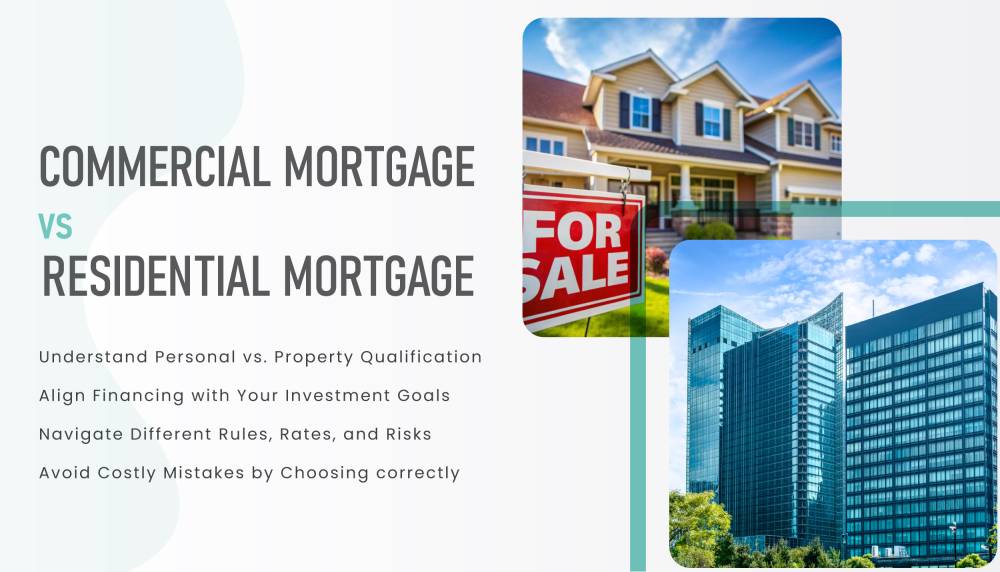
When it comes to borrowing money for real estate, not all mortgages are created equal. One of the most common points of confusion for buyers, investors, and business owners is understanding the difference between a commercial vs residential mortgage. While both involve financing property, the rules, risks, and requirements behind them are fundamentally different.
Whether you’re buying a home, investing in rental property, or financing a business location, choosing the wrong loan type can cost you time, money, and opportunity. This guide breaks down the key mortgage differences, helping you understand how commercial property financing rules differ from traditional home loans and how to determine which path fits your goals.
At Ink Mortgage, we work with both residential and commercial borrowers, helping clients navigate complex lending decisions with clarity and confidence.
Understanding the Basics: What Is a Residential Mortgage?
A residential mortgage is a loan used to purchase or refinance a property intended primarily for personal living. These loans are designed around consumer protection and long-term affordability.
Residential mortgages typically apply to:
Most homebuyers are familiar with residential loans through conventional mortgages, FHA loans, VA loans, or jumbo loans. These products are standardized, heavily regulated, and widely available through banks and mortgage brokers.
You can explore common residential loan structures by reviewing Ink Mortgage’s loan options.
What Is a Commercial Mortgage?
A commercial mortgage is used to finance property intended for business or income-generating purposes. Unlike residential loans, commercial mortgages are evaluated based on the property’s ability to generate revenue rather than the borrower’s personal income alone.
Commercial mortgages are commonly used for:
This is where the business loan vs home loan distinction becomes clear. Commercial lending focuses on cash flow, risk management, and investment performance.
Ink Mortgage works with a wide network of lenders, highlighted in our lending partnerships, to help borrowers secure competitive commercial financing.
Commercial vs Residential Mortgage: The Core Differences
1. Purpose of the Property
The most important distinction in commercial vs residential mortgage lending is how the property is used.
Residential mortgages are tied to personal use. Even rental properties under four units are often treated as residential if they meet certain criteria.
Commercial mortgages are strictly for business use or large-scale investment. If a property is designed to produce income through tenants, operations, or resale, it typically falls under commercial financing.
2. Qualification Criteria
Residential mortgage approval is largely based on the borrower’s personal financial profile:
Credit history
Debt-to-income ratio
Employment history
Income documentation
Commercial mortgage approval shifts the focus to the asset itself. Lenders evaluate:
Net operating income (NOI)
Debt service coverage ratio (DSCR)
Occupancy rates
Business financials (if owner-occupied)
This difference in underwriting standards is one of the most significant mortgage differences borrowers encounter.
3. Loan Terms and Amortization
Residential mortgages are known for stability and long terms. Common structures include:
15-year, 20-year, 25-year, 30-year & 40-year fixed and adjustable rate loans
Fully amortizing payments
Predictable monthly costs
Commercial mortgages are structured differently:
Borrowers often refinance commercial loans at the end of the term, making long-term planning essential.
4. Interest Rates and Fees
Interest rates on commercial loans are typically higher than residential rates. This reflects increased risk, market variability, and lower regulatory protection.
Commercial loans may also include:
Residential mortgages, by contrast, benefit from standardized fee structures and consumer-focused regulations.
To estimate how different loan structures affect affordability, borrowers can use the Ink Mortgage calculator to compare scenarios.
5. Down Payment Requirements
Down payment expectations highlight another major business loan vs home loan difference.
Residential loans may require:
Commercial mortgages typically require:
25–35% down (20% rarely is acceptable)
Strong liquidity reserves
Additional capital for operating expenses
This higher upfront investment is a key factor in determining whether a borrower is ready for commercial financing.
Commercial Property Financing Rules You Should Know
Commercial property financing is governed by different rules than residential lending. These rules are set by lenders rather than federal consumer protection standards.
Key commercial lending rules include:
Property performance matters more than borrower income
Loan terms are negotiable and vary widely by lender
Risk tolerance differs across property types
Personal guarantees may be required
Because of this complexity, working with a knowledgeable mortgage partner is critical. Ink Mortgage helps borrowers navigate lender-specific requirements and align financing with long-term goals.
Risk Assessment: Who Carries the Risk?
In residential lending, risk is largely mitigated through government-backed programs, standardized underwriting, and long amortization periods.
In commercial lending, risk is shared more heavily by the borrower. Lenders expect borrowers to understand:
Market volatility
Tenant turnover
Operating expenses
Economic cycles
This is why commercial loans are more customized and less automated than residential mortgages.
Flexibility and Customization
One advantage of commercial mortgages is flexibility. Unlike residential loans, which follow rigid guidelines, commercial loans can be tailored to:
This flexibility allows experienced investors and business owners to structure loans that align with their strategy—but it also requires careful planning and expert guidance.
Which Mortgage Is Right for You?
Choosing between a commercial vs residential mortgage depends on your objectives.
A residential mortgage may be right if you:
Are buying a primary, secondary or investment home
Want predictable, long-term payments
Prefer standardized lending terms
A commercial mortgage may be right if you:
Are purchasing income-producing property
Own or operate a business from the property
Are focused on investment returns and scalability
If you’re unsure where your situation fits, reviewing Ink Mortgage’s loan options is a good starting point.
Common Mistakes Borrowers Make
Many borrowers run into trouble in wholesale channels by:
Underestimating commercial down payment requirements
Failing to prepare financial documentation
Ignoring refinancing timelines on commercial loans
Education is the best way to avoid costly missteps. This is why informational resources play a key role in the mortgage decision-making process.
You can also review real client experiences in Ink Mortgage testimonials to see how proper guidance makes a difference.
How Ink Mortgage Helps You Navigate Both
Ink Mortgage is positioned to guide borrowers through both residential and commercial financing paths. Our approach focuses on:
Matching borrowers with the correct loan scenarios
Access to diverse lender networks
Clear education at every stage of the process
Transparent expectations around costs and timelines
Whether you’re exploring your first home loan or evaluating a commercial investment, our team helps you make informed decisions based on facts not assumptions.
You can learn more about our credentials and approach through our mortgage licensing and compliance information.
Self-Qualifying Before You Apply
One of the primary goals of understanding commercial vs residential mortgage differences is self-qualification. When borrowers understand:
Which loan type applies
What lenders expect
How risk is evaluated
They approach the process more confidently and efficiently.
If you’re still researching, the educational content in recent posts can help deepen your understanding before taking the next step.
Final Thoughts: Knowledge Leads to Better Financing Decisions
The difference between a commercial and residential mortgage is more than terminology it affects your financial risk, loan structure, and long-term outcomes. Understanding these mortgage differences empowers you to choose the right path, avoid unnecessary obstacles, and align financing with your goals.
Whether you’re buying a home or investing in commercial real estate, the right information makes all the difference.
If you’re ready to discuss your options or want guidance tailored to your situation, connect with the Ink Mortgage team through our contact page.